
The rules just changed, and if you're planning to study abroad in 2026, being caught off guard could cost you your dream.
Governments across the world's top study destinations have overhauled their student visa policies this year. Some changes are subtle. Others are sweeping. All of them matter. Whether you're aiming for the USA, UK, Canada, or Australia, this guide breaks down exactly what's new, what it means for you, and what you must do next.
International student migration has never been more competitive or more complicated. Post-pandemic recovery, tightening immigration controls, and shifting political climates have pushed governments to restructure their student visa frameworks.
The result: tougher eligibility criteria, higher financial thresholds, stricter documentation, and shorter grace periods. But here's the good news: with the right preparation, you can still get in. You just need to know the rules before you apply.
The United States has proposed one of its most significant student visa overhauls in decades.
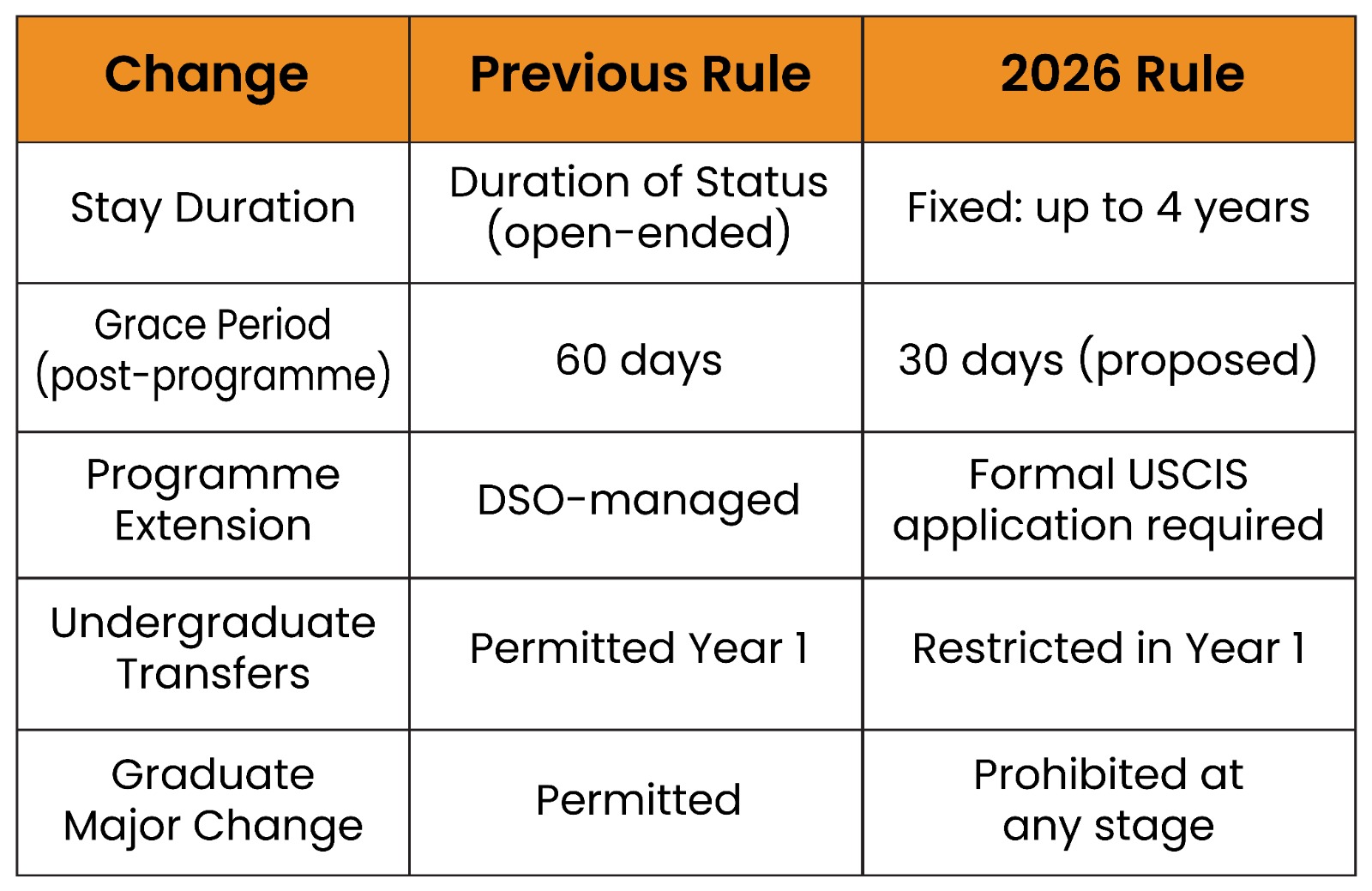
The student visa environment in the USA is now more structured but also more demanding. Students pursuing a university in the USA for masters must be especially careful about programme continuity and extension deadlines.
The UK has made a series of updates that affect both the student visa application process and the financial burden on students.
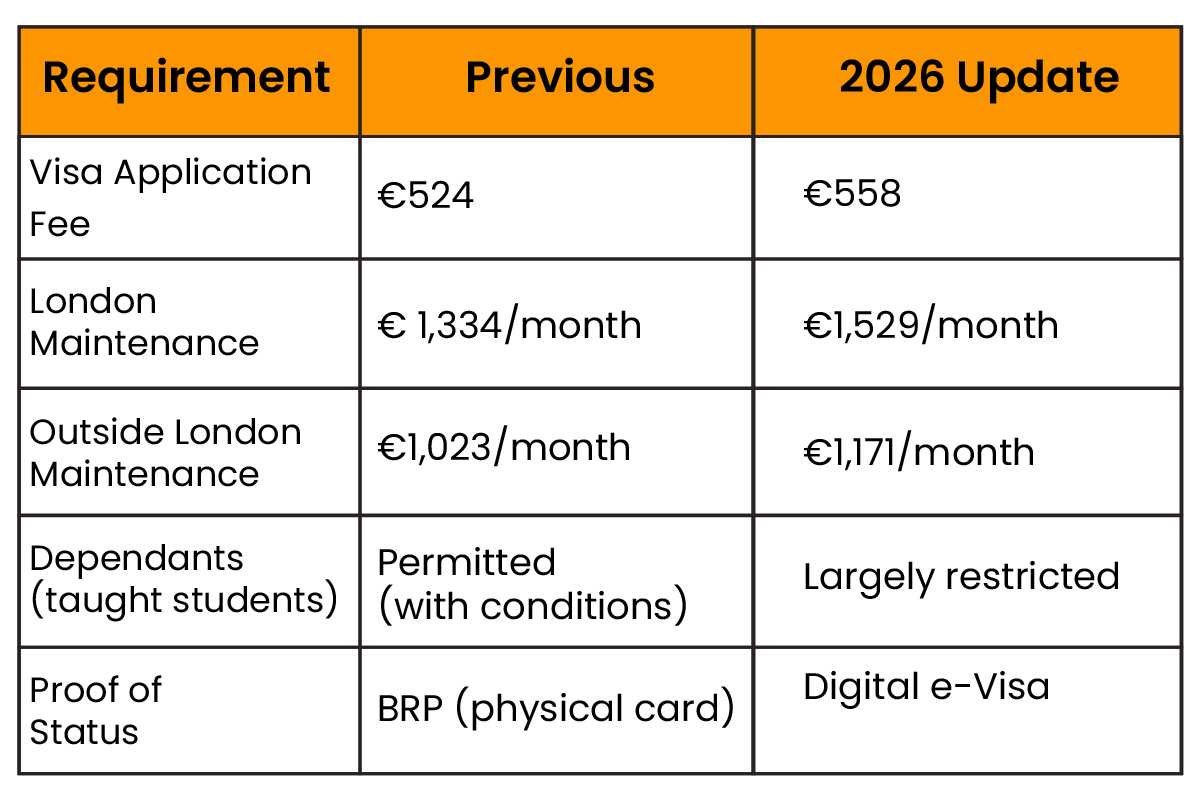
The UK student visa application process now also requires digital proof of funds in many cases. Ensure your documents are compliant before submission.
Canada has shifted from being one of the most accessible destinations to one of the most carefully managed. The student visa environment here has changed considerably since late 2024, and 2026 brings further consolidation.
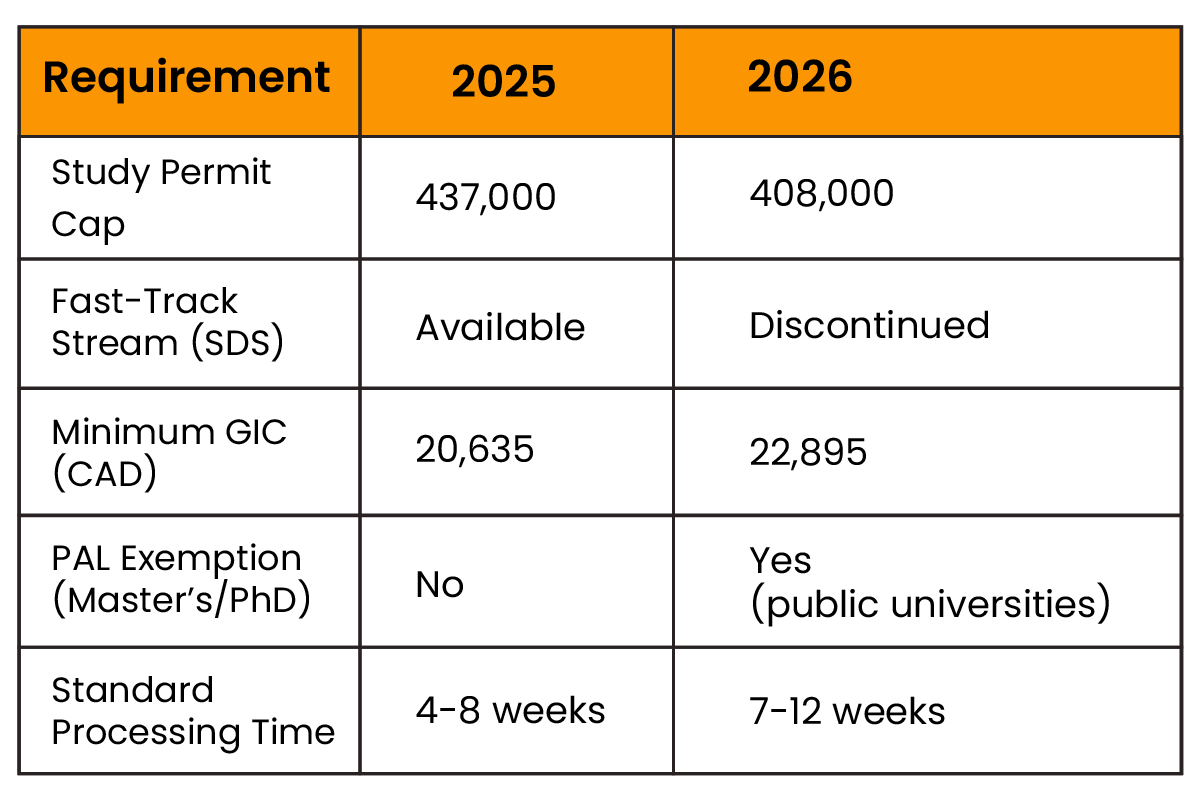
A visa application for Canada now demands meticulous preparation. Do not rely on timelines that applied even one year ago.
Australia has introduced the most sweeping student visa reform of any major study destination this year. If you're planning to apply, read this section carefully.
No matter your destination, the fundamentals of a strong student visa application in 2026 come down to three things: early preparation, complete documentation, and a credible academic narrative.
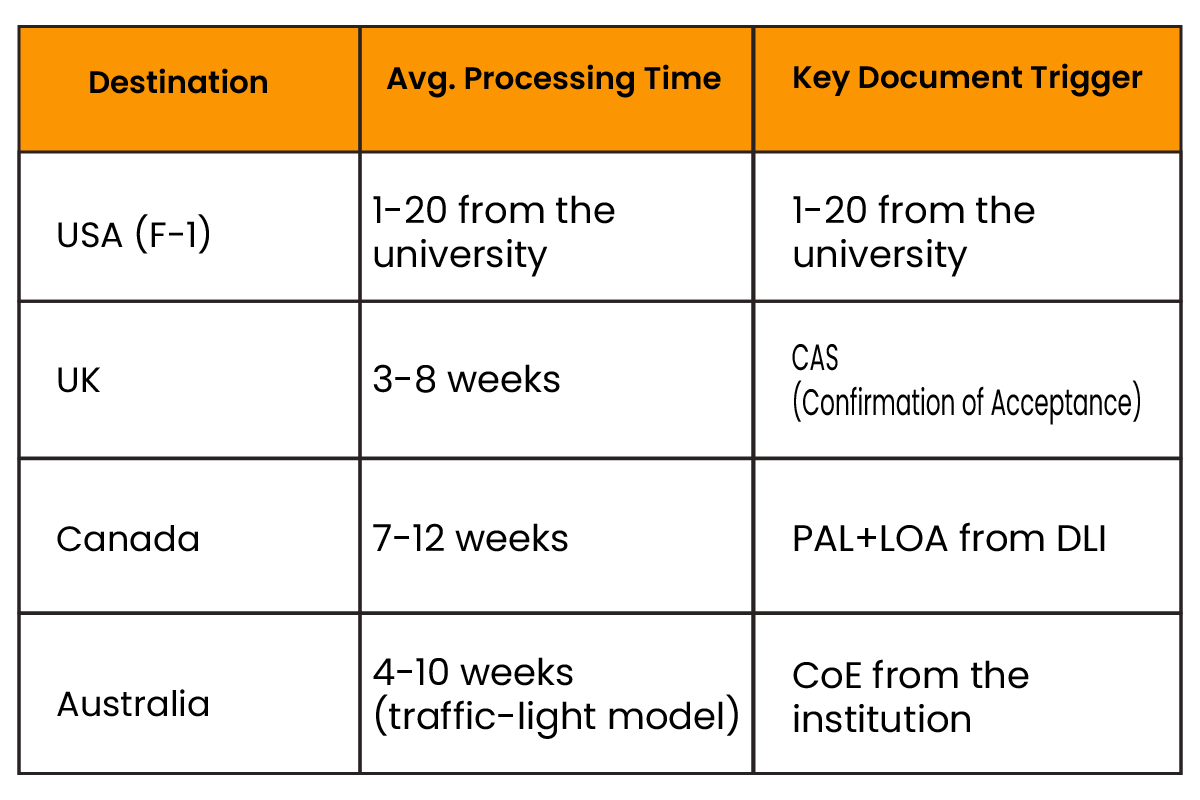
Here is a destination-wise visa processing time snapshot:
Submit early. Gather financial documents well in advance. And make sure your Statement of Purpose reflects a genuine academic purpose.
At WIKATI Education, we have been guiding students through exactly these kinds of policy shifts for over 13 years. We have helped more than 15,000 students navigate the student visa process with a 98.6% visa success rate, and 2026 is no different.
We know that news like this can feel overwhelming. New rules, higher fees, tighter caps: it is a lot to process when you are already managing entrance exams, shortlisting universities, and managing family expectations.
That is precisely why we do not just hand you a checklist. We sit with you. We understand your profile, your destination preference, your timeline, and your budget. Then we build a plan that accounts for every single one of these 2026 changes, so nothing slips through the cracks.
Our counsellors are trained on the latest student visa policy updates across the USA, UK, Canada, and Australia. From helping you understand the new Australia study visa requirements to preparing you for the UK's updated financial proof norms, we handle it all: end-to-end.
You dream about it. We build the path.
2026 has brought real change to international student immigration. But change, when navigated correctly, is just an opportunity in disguise. Students who prepare early, document thoroughly, and seek expert guidance are still winning their student visa approvals every single day.
Do not let policy shifts derail your study abroad dream. The rules changed; your ambition does not have to.
Ready to get your student visa right? Book a FREE consultation with WIKATI Education today.
Yes. The USA is replacing "Duration of Status" with a fixed stay of up to 4 years. Extensions now require a formal USCIS application, unlike before.
You need £1,529/month (London) or £1,171/month (outside London) in maintenance funds, held for 28 consecutive days before applying.
No. Canada discontinued the Student Direct Stream. All applicants now apply through the Standard Stream, with processing taking 7 to 12 weeks.
The Genuine Student (GS) requirement replaced the old GTE test. Students must clearly demonstrate their study intent and how it aligns with career goals.
The Australian student visa fee increased to AUD 2,000 in 2026, up from AUD 1,600. Financial proof requirements have also risen significantly.
© Copyright WIKATI Education Services LLC