
If you are planning to study in Canada, the Post-Graduation Work Permit (PGWP) can be one of the most important parts of your plan. It lets eligible international graduates work in Canada after completing an eligible program, build Canadian experience, and potentially move toward permanent residence through the Canadian Experience Class (CEC).
Students looking for the best study abroad consultants in Hyderabad often hear one piece of advice from Wikati Education counsellors: a Canada plan should begin with the right course, not just the right university. Your program length, field of study, language score, and work experience can all affect your PGWP and future immigration options.
A student visa for Indian students, officially called a study permit, allows you to study in Canada. After you graduate, you may be able to apply for a PGWP if you meet Immigration, Refugees and Citizenship Canada (IRCC) requirements.
In simple terms, you may qualify for a PGWP if you:
The PGWP duration depends mainly on your program length.
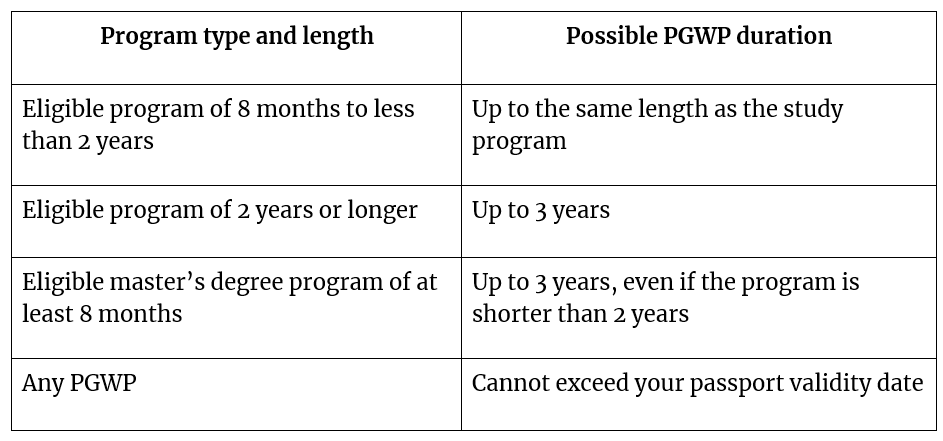
A 16-month diploma may get you a 16-month PGWP, while a two-year program can offer up to three years. An eligible master’s degree of at least eight months may also qualify for a three-year PGWP.
The field-of-study requirement does not apply to every graduate. It mainly affects students who complete non-degree programs at colleges, polytechnics, and other non-university institutions.
If you study for a bachelor’s, master’s, or doctoral degree, there is currently no field-of-study requirement for PGWP eligibility. However, if you graduate from another university program or a college program, you may need to graduate from an eligible field of study.
The language requirement also differs by credential type.
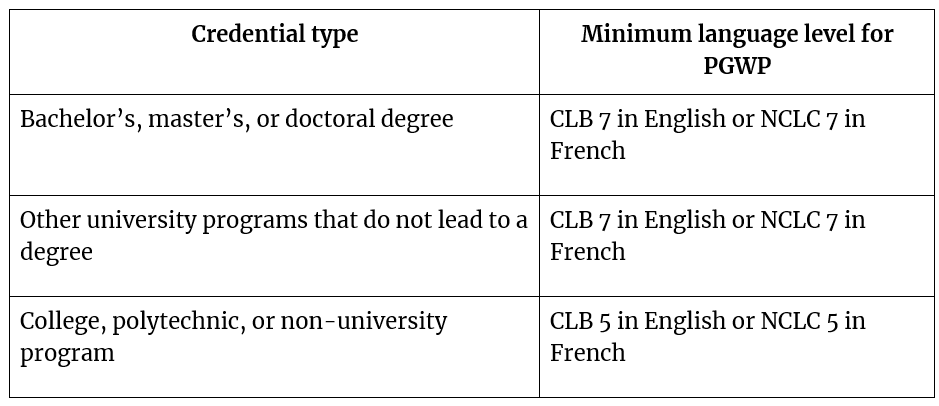
These levels apply across all four language skills: reading, writing, listening, and speaking. Accepted tests can include IELTS General Training, CELPIP, PTE Core, TEF Canada, and TCF Canada, depending on the language and test you choose.
This is why Wikati counsellors advise students to check the exact program before applying. A course that looks attractive on a university website may not support your long-term Canada plan if it does not meet the PGWP requirements that apply to your situation.
Many Indian students want to work while studying to manage living costs and gain exposure to the Canadian workplace. Canada allows eligible international students to work off campus without a separate work permit, but only under specific conditions.
You may work off campus if you:
During academic sessions, eligible students can work up to 24 hours per week off campus. During scheduled breaks, such as winter or summer holidays and reading weeks, you may work full time.
There are important limits. A scheduled break must be part of your institution’s academic calendar and must last at least seven consecutive days. If back-to-back breaks create a period longer than 150 consecutive days, you can work full time only during the first 150 days. Across a calendar year, the total time you can work full time during scheduled breaks is limited to 180 days.
You cannot begin working before your program starts. You also cannot rely on off-campus work if your study permit does not include the correct work condition. If your permit does not show that you can work off campus, speak with your institution or a qualified immigration professional before accepting a job.
The period after graduation can feel rushed, so it helps to treat it as a planned timeline rather than something to handle after the final exam.
The most important rule is the 180-day window. You have up to 180 days after your school issues your final marks or official confirmation of completion to submit the PGWP application. Missing this window can affect eligibility.
A PGWP is not permanent residence by itself. It is an open work permit that gives you time to gain Canadian work experience after graduation. That experience can help you become eligible for the Canadian Experience Class under Express Entry.
To qualify for the CEC, you generally need:
For TEER 0 or TEER 1 occupations, the CEC requires CLB 7 in English or NCLC 7 in French. For TEER 2 or TEER 3 occupations, the requirement is CLB 5 in English or NCLC 5 in French.
Work completed while you were a full-time student, including many co-op placements, generally does not count toward CEC work experience. The experience must be gained after you complete your program and obtain your Canadian educational credential.
A practical pathway can look like this:
This is why choosing a course should never be only about tuition, rankings, or a city. It should also align with your career goal, PGWP eligibility, and realistic PR pathway.
At Wikati Education, many students begin their Canada journey with one question: “Which course will help me stay and work after graduation?” That is the right question, but it needs a structured answer.
Our counsellor-led course shortlisting process looks at more than university names. Counsellors review:
This approach is important because meeting the student visa requirements can also affect your PGWP eligibility. A strong application should show a genuine study plan, appropriate finances, clear career intent, and a program that makes sense for your background. You can read more about what visa officers check before approving a student visa application.
We at WIKATI have helped 15,000+ students study globally, partners with 1,600+ universities, and reports a 98.6% visa success rate through informed guidance.
If you are comparing Canada student visa options, it is also worth reviewing the latest study abroad visa rule changes before finalizing your course and intake. Immigration rules can change, so your plan should be based on current official requirements rather than outdated advice. Before finalizing your university and city, explore the best cities in Canada for international students to understand living costs, work opportunities, and student life.
Our counsellors often meet students who focused only on admission and later faced avoidable problems. These are the mistakes every applicant should avoid:
Your study visa is only the first stage. The stronger plan considers what happens after convocation: work authorization, skilled experience, language scores, and long-term settlement goals.
Choosing Canada is an exciting decision, but the real advantage comes from choosing the right program early. Through study abroad counselling in Hyderabad, Wikati Education helps students build a practical plan that connects their course choice, support from experienced student visa consultants, PGWP eligibility, and long-term career goals.
If you want clarity on universities, programs, finances, documentation, and the process to apply for student visa approval, book a free counselling session with us. A well-planned Canada journey can help you move from classroom to career with confidence.
© Copyright WIKATI Education Services LLC